
Car Audio Installation
A custom car audio installation is a sound system designed around one specific vehicle rather than sold as a fixed package. At Autoplanet in…
Read about car audio installation →Is car sound damping worth doing?
It depends on what you are trying to fix. Damping is highly effective at two things: stopping door and panel resonance that muddies speaker output, and reducing structure-borne road noise. It does far less for wind noise around glass and seals. For audio work it is usually the highest-value money spent per rupee, because it makes the speakers you already own work properly.
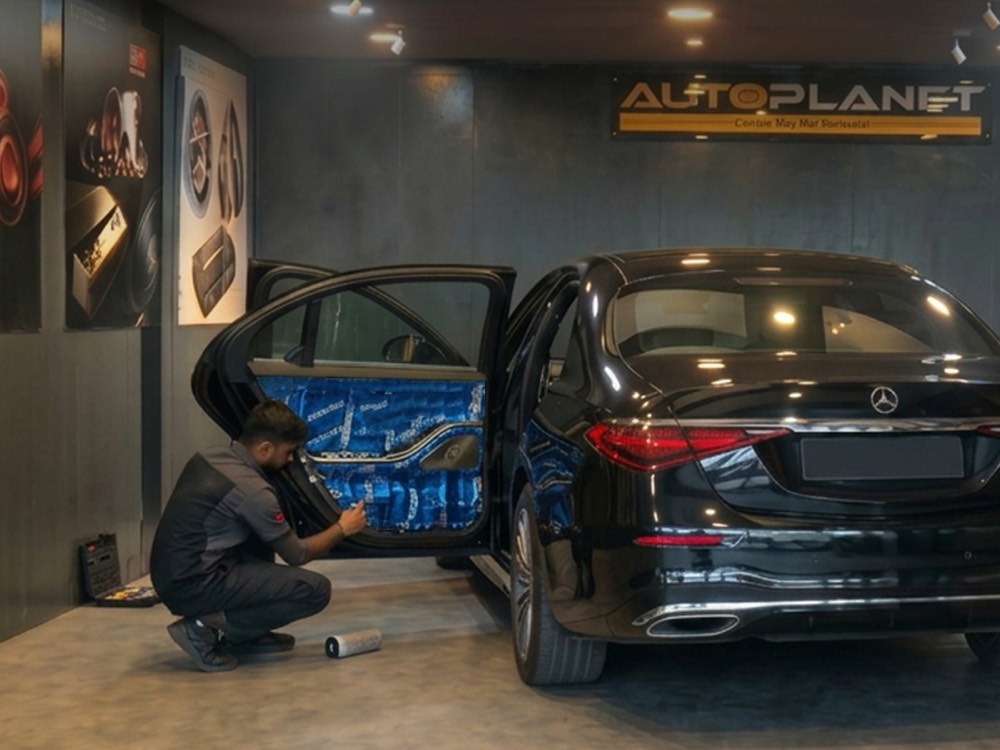
A car door is a thin steel box with a large hole in it, and a speaker bolted to it drives the whole panel into vibration. That vibration colours everything you hear — midbass becomes loose, detail smears, and the door itself starts contributing sound of its own.
Damping addresses this by adding mass and constraining the panel so it stores less energy. Done in the right places it turns the door into a more stable baffle. Done indiscriminately it mostly adds weight.
That is why we plan coverage rather than quote a number of sheets. Which panels matter depends on the car, on where the speakers are, and on whether your priority is audio quality or cabin quietness — these lead to different treatment maps.
| What it treats | Panel resonance, structure-borne road noise, rattles, boot drumming |
|---|---|
| Best results on | Front doors, rear doors, boot floor and arches, roof, firewall area |
| Less effective on | Wind noise around glass and door seals — that is a sealing problem |
| Planned by | Vehicle, speaker locations, and whether the goal is audio or quietness |
| Common pairing | Damping alongside a speaker upgrade — the two reinforce each other |
| Coverage | Mapped at consultation, not sold as a fixed sheet count |
| Pricing | Quoted after the vehicle and target coverage are agreed |
A transparent process, so you know what happens to your car and why.
Audio improvement and cabin quietness are related but not identical targets. Which one leads determines where material goes and how much.
We check panel construction, existing factory treatment, access, and where noise is actually entering the cabin on your car.
We agree which panels get treated and to what extent, and explain what each stage should change — and what it will not.
Trim is removed carefully and surfaces are cleaned so material bonds properly. Preparation is most of the difference between damping that lasts and damping that peels.
Damping material is applied to the mapped areas and rolled down for full adhesion. Where the design calls for it, decoupling or absorption layers are added.
Trim, clips and seals are refitted so the interior goes back together without rattles or gaps.
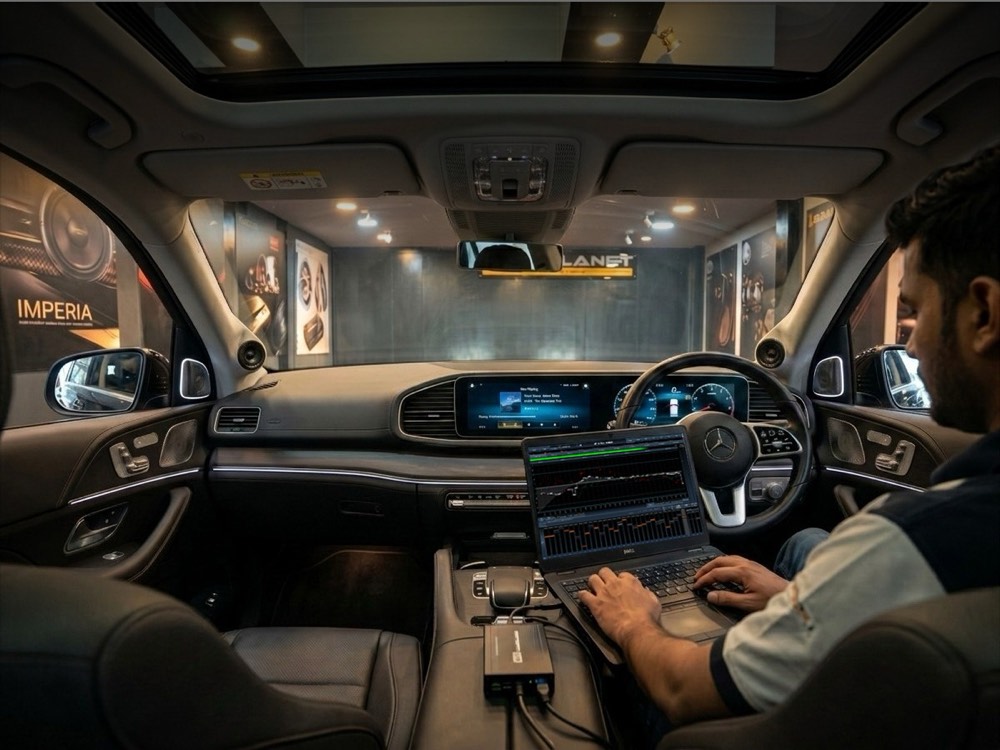
We listen for what changed, and where audio was the goal, re-check the system's response since damping alters the acoustic environment the tune was set in.
We would rather tell you the limits up front than have you discover them afterwards. Anything we cannot honestly promise before seeing your vehicle, we say so.
This is the wrong unit to buy in. Sheet count says nothing about whether the right panels were treated or whether the material was properly rolled down. A carefully mapped treatment of the front doors can outperform an indiscriminate whole-car job that added significant weight. We agree coverage by area and purpose, then you know what you are getting.
It reduces structure-borne noise — the vibration transmitted through the floor, arches and panels — which is a substantial part of what you hear at speed. It does much less for airborne noise entering through glass and door seals. Anyone promising silence from damping alone is overselling it. How much you gain depends on your vehicle's starting point.
Ideally at the same time, because the doors are already open. If you have to choose an order, damping first is usually the better sequence: it changes the acoustic environment, so a system tuned before damping will need retuning after. Doing both in one visit avoids paying for the same disassembly twice.
Any added mass has weight, which is exactly why targeted coverage matters more than total coverage. A planned treatment adds a fraction of what a wall-to-wall application does, while delivering most of the audible benefit. We tell you what the agreed scope involves before work starts.
Quality automotive damping materials are made for the temperature range and conditions inside a vehicle. The variables that matter are the material's specification and whether it was applied to a properly prepared surface — poorly bonded material can lift in heat. We are happy to tell you what we are using and why at consultation.
The studio is at Shop No. 703/4, 3rd Block, Behind Koramangala BDA Complex, Koramangala. Customers regularly travel from across the city.
Installations carried out at the Koramangala studio.

A custom car audio installation is a sound system designed around one specific vehicle rather than sold as a fixed package. At Autoplanet in…
Read about car audio installation →DSP tuning corrects the problems a car's cabin creates. A digital signal processor lets an installer set level, crossover points, equalisation and…
Read about dsp tuning and calibration →Interior customisation covers seat upholstery or covers, trim finishes, steering and console details, and boot or cargo area presentation. The…
Read about interior customisation →Every quote follows a consultation, because scope depends on your car, your priorities and what we find at inspection. Bring the car in and we will walk you through the options.